
Undead
Confirmed Dude Family
Build a five-Dude team. Know what changes the run.
How Many Dudes? is a released roguelike dudebuilder built around automated battles and the choices made before and between them. The full release has 42 unique Dude Types organized into six Families, and every team uses five Dudes. Those roster decisions matter beyond the battle line because each selected Dude Type and represented Family changes which Relics can enter the run.
This player wiki turns the confirmed release facts, official developer guide, and first-party screenshots into eight focused references. Start with the roster, open the beginner walkthrough for an ordered run plan, or use the Relics, Trinkets, Team Building, Tiers, and Game Modes pages when one system is blocking the next decision.
This reserved placement keeps advertising separate from the field guide.
How Many Dudes? separates its useful decisions into a small set of repeatable tasks. The characters page explains the roster shape: 42 unique Dude Types, six Dude Families, and a five-Dude team. The Relics page explains why every recruited type and represented Family changes the choice pool. Trinkets covers the boss rewards assigned to Dude Types. Team Building connects those systems without pretending that a single universal lineup exists.
The walkthrough turns the official developer guidance into an ordered beginner route: allow the recovery window, use Business Dude’s three investment opportunities deliberately, build early defenses against one-shots, and prepare for the Tier 1 G.O.A.T. at round 105. The Tiers and Game Modes pages separate progression rules from Daily Dude, Ensemble, and Rematch decisions. Each route answers one question, then links to the next decision rather than repeating the whole wiki.
The roster is grouped into Undead, Employed, Warrior, Fantasy, Sci-Fi, and Action. The Family labels are not cosmetic categories: represented Families contribute Family Relics to the run’s pool. That makes the Family index useful both when scanning the 42 Dude Types and when planning how broad or concentrated a five-Dude composition should be.
This wiki uses wanted-notice sheets because recruitment in the official screenshots is presented through flyers. Each sheet leads to the characters reference and the team-building explanation. No portrait or individual roster name is invented here; the complete official count and Family structure are published, while a verified full list of all 42 names is not yet available in the supplied first-party material.
Confirmed Dude Family
Confirmed Dude Family
Confirmed Dude Family
Confirmed Dude Family
Confirmed Dude Family
Confirmed Dude Family
Each Dude Type contributes seven Dude Relics, and each represented Family contributes eight Family Relics. A Relic is added only once, so repeated membership does not create duplicate copies of the same Family contribution. The practical decision is not “more Families is always better.” A broader team adds more Family options, while a concentrated team keeps the represented-Family portion narrower. The Relics and Team Building pages explain that tradeoff without assigning unsupported rankings.
Act bosses reward Trinkets assigned to a Dude Type, while challenge progression spans three Tiers and Silver and Gold Stars. Together, those systems make a run a sequence of roster, pool, defense, and boss decisions. The table below keeps the confirmed rules next to the task they affect, and the official Relic-choice screenshot shows the three-choice presentation used during play.
| Record | Verified value | Why it matters |
|---|---|---|
| Dude Type | 7 Dude Relics | Added by each selected type |
| Represented Family | 8 Family Relics | Added once per represented Family |
| Act boss | Trinket | Assigned to a Dude Type |
| Challenge | 3 Tiers | Silver and Gold Star progression |
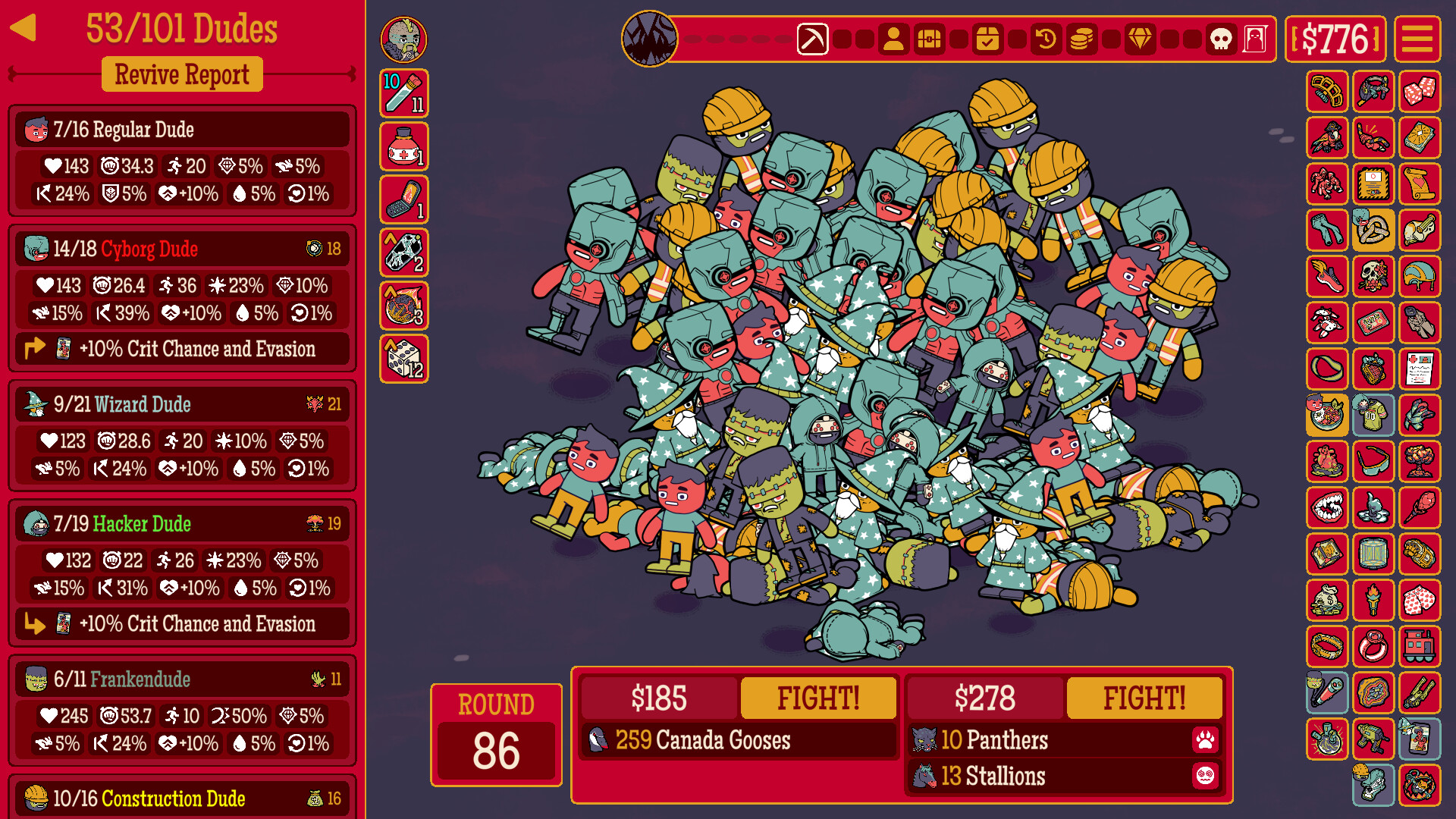
A beginner can read the official guidance as four checkpoints. First, recovery can happen without Dude Juice after a few rounds, so a damaged roster is not automatically a failed run. Second, Business Dude can double an investment three times, creating a concrete timing decision rather than a vague instruction to save. Third, early defensive stats reduce the risk of one-shots. Fourth, the Tier 1 G.O.A.T. at round 105 combines movement with large bursts of damage.
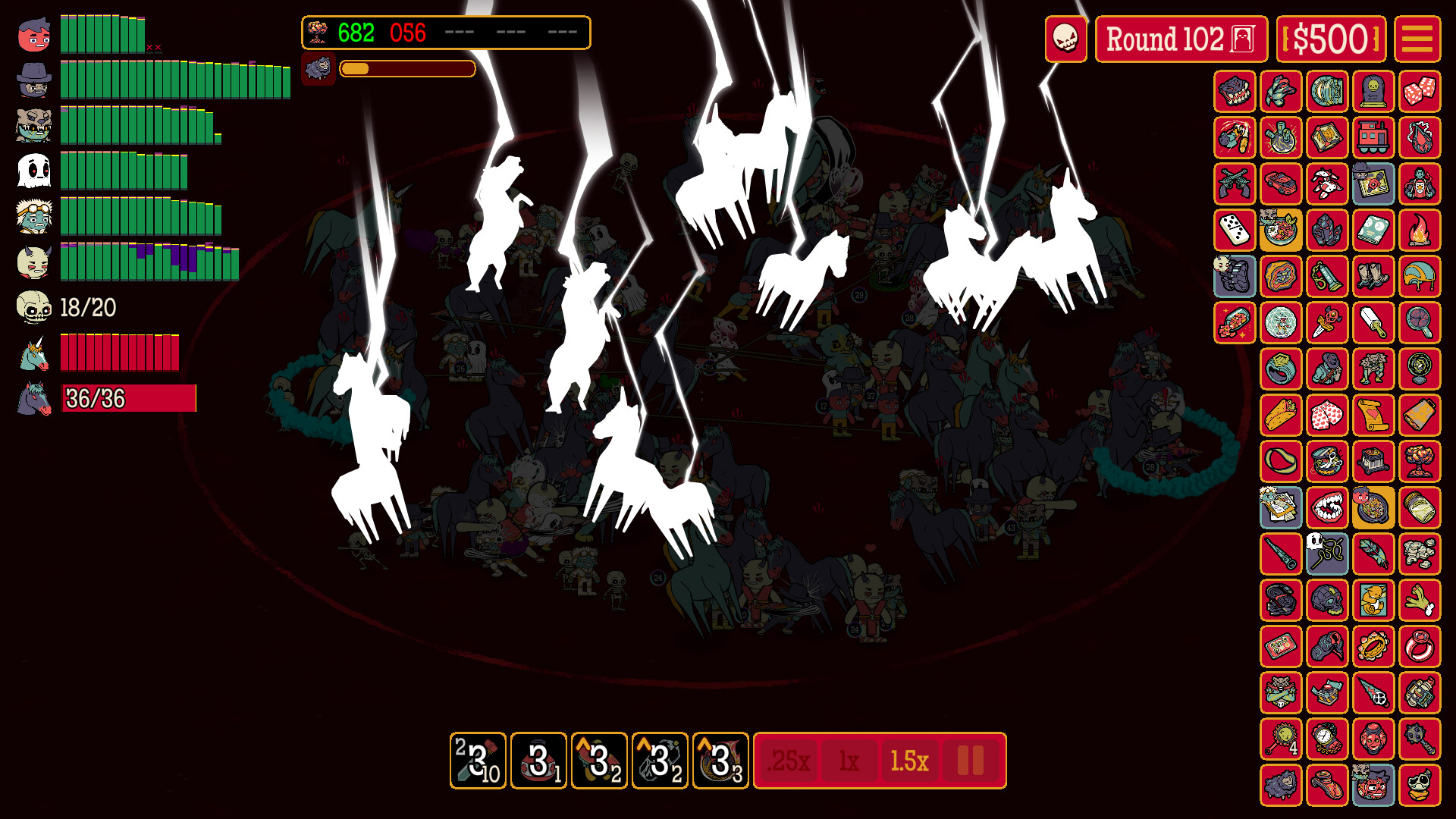
Toughness, Max HP, and Temporary Health are the named responses to large hits, while Mobility helps a team pursue moving bosses. Those are preparation categories, not a claim that every Dude needs identical stats. The walkthrough keeps each recommendation attached to the problem it solves, and the boss screenshot provides visual context for the late-round density described by the developer guide.
The trailer is listed in the official Steam media for How Many Dudes? and is presented here behind a click-to-load facade. The initial page does not request the video stream. Choosing play mounts the official store-hosted video, while the visible source link remains available for readers who prefer to open the store page directly.
All screenshots on this wiki are receipt-bound first-party Steam assets published by Butterscotch Shenanigans. Captions describe what the image demonstrates in the surrounding section. Images are not reused as invented portraits, cropped into fake item art, or treated as evidence for names and numbers that do not appear in the structured fact inventory.