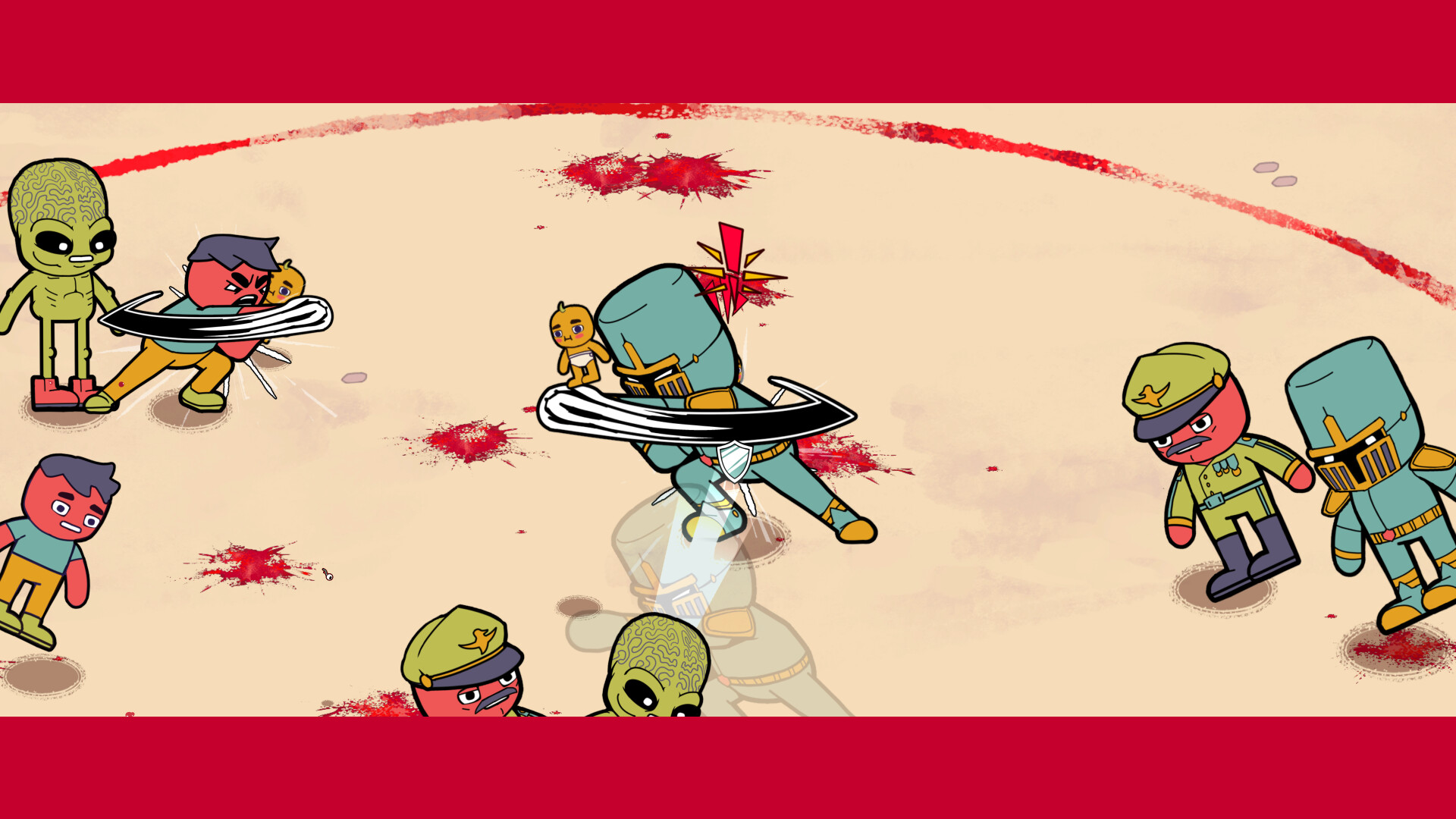
Read the 42 / 6 / 5 shape before searching for a lineup
The confirmed release roster contains 42 unique Dude Types, but a run uses only five Dudes. That gap is the reason roster lookup and team planning are different tasks. The characters reference begins with what can be verified across the supplied official sources: the total count, the six Family labels, and the five-Dude team limit. It does not fill the missing full name list with guesses or names inferred from tiny screenshot text.
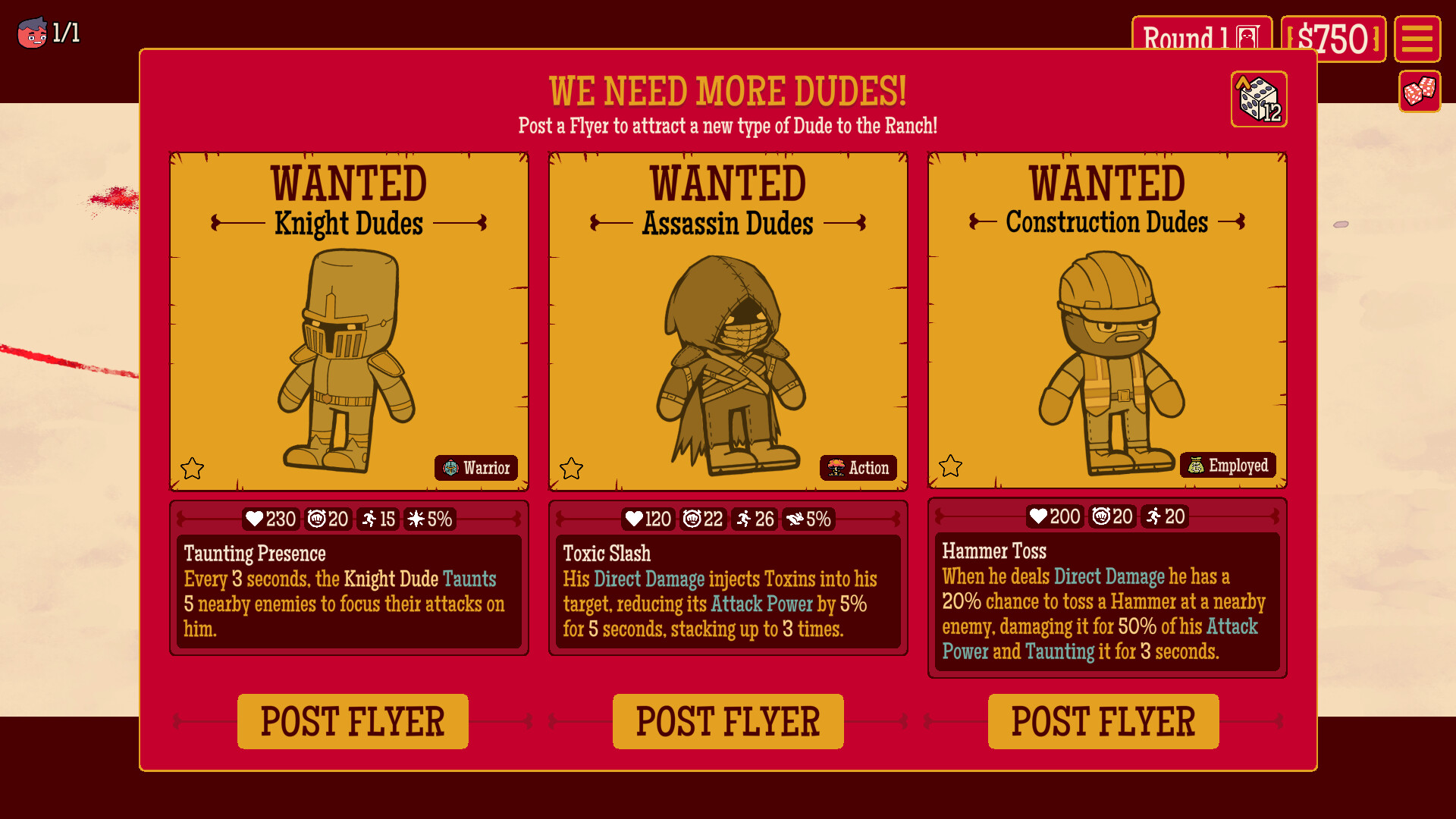
Use the count as a completeness check when a full official roster export becomes available. Until then, the six-Family index is the reliable browsing layer. It gives every confirmed Family one place in the table and keeps links to the system pages that explain why Family representation affects Relics. The official recruitment screenshot shows wanted flyers, Dude Type labels, and Family labels in the game’s own interface.
Use the six Families as the stable roster index
Undead, Employed, Warrior, Fantasy, Sci-Fi, and Action are the six named Dude Families. A Family is useful for organization, but it also has a run-level consequence: every represented Family contributes eight Family Relics to the pool. The characters page therefore pairs each Family with two destinations. Roster lookup answers where a Dude belongs; Team Building answers what a represented Family changes.
A Family label alone does not establish a stat role or tier. The official facts say that stat affinities differ by Dude, not that every member of one Family shares one fixed job. Avoid treating the six labels as automatic tank, damage, support, or economy classes unless a first-party record identifies that role. The filter narrows the table by confirmed Family name and does not claim to search an unpublished individual roster.
| Family | Verified roster use | Relic-pool effect | Next reference |
|---|---|---|---|
| Undead | One of six confirmed Dude Families | 8 Family Relics when represented; added once | Team building |
| Employed | One of six confirmed Dude Families | 8 Family Relics when represented; added once | Team building |
| Warrior | One of six confirmed Dude Families | 8 Family Relics when represented; added once | Team building |
| Fantasy | One of six confirmed Dude Families | 8 Family Relics when represented; added once | Team building |
| Sci-Fi | One of six confirmed Dude Families | 8 Family Relics when represented; added once | Team building |
| Action | One of six confirmed Dude Families | 8 Family Relics when represented; added once | Team building |
Five slots force choices among more than 850,000 compositions
The developer reports more than 850,000 possible five-Dude team compositions. That figure signals breadth, not a published leaderboard. A useful team-building process starts with the current run’s problem, checks the five available slots, and then considers stat affinities, Dude Relics, and represented Families. It does not begin by declaring one arrangement best for every mode and Tier.
The five-slot limit makes duplication and diversity meaningful. Adding a new Dude Type always introduces its seven Dude Relics to the pool. Adding a Dude from a Family already represented does not add a second copy of that Family’s eight Relics, while adding a new Family introduces another Family set. That is why roster composition can be discussed precisely even without inventing per-character rankings or unverified numerical stat sheets.
| Record | Verified value | Why it matters |
|---|---|---|
| Team size | 5 Dudes | Every run composition |
| Roster size | 42 unique types | Confirmed full-release total |
| Compositions | 850,000+ | Developer-reported possibilities |
| Family effect | 8 Relics | Once per represented Family |
| Dude effect | 7 Relics | Per selected Dude Type |
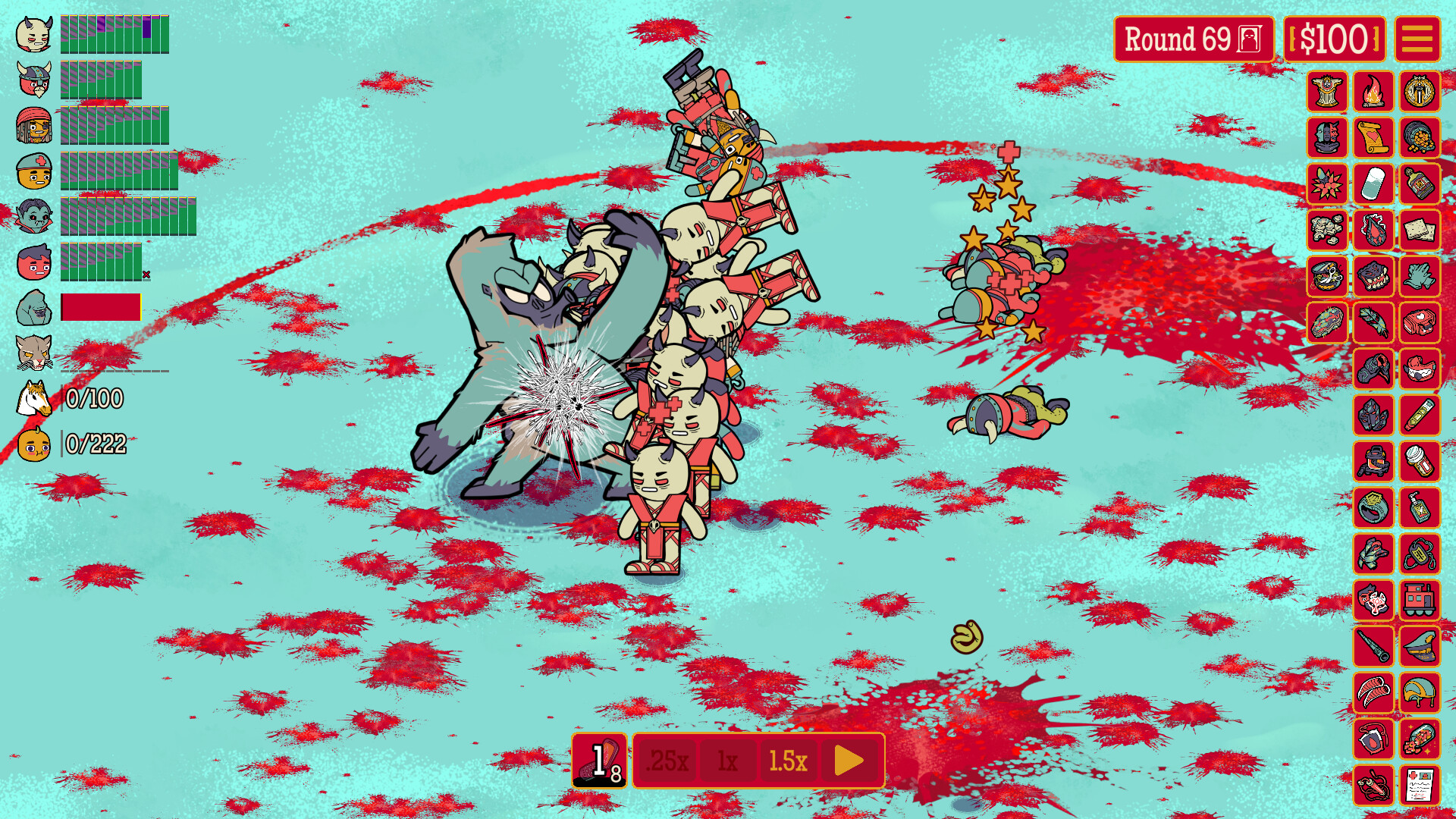
Move from Family, to five slots, to the next system decision
When checking a roster choice, first identify the confirmed Family shown by the game. Second, count how many of the five team slots are already committed. Third, separate the Dude Type’s seven-Relic contribution from the eight-Relic contribution of any newly represented Family. Fourth, check the run’s immediate pressure: recovery, investment timing, early defense, or a moving boss. This sequence keeps the roster page connected to actual decisions.
For a first run, the walkthrough provides the ordered preparation checkpoints. For a pool question, open Relics. For a reward already assigned to a Dude Type, open Trinkets. For a composition question, open Team Building. The characters page remains an index rather than pretending that the supplied evidence contains a full 42-row database with names, skills, and exact stats.
- Identify the confirmed Family shown by the game.
- Count the five team slots already committed.
- Separate the Dude Type Relics from any newly represented Family Relics.
- Match the roster choice to the next run pressure.
Character roster questions
Does this page list all 42 Dude Type names?
FAQ: No. The official sources in the supplied project confirm the total of 42 unique Dude Types and the six Family names, but they do not provide a clean, complete machine-readable list of all 42 names. The page keeps the verified structure and avoids turning small screenshot text or guesses into permanent roster entries.
Are the six Families the same as fixed combat roles?
FAQ: The sources confirm the Family labels and state that stat affinities differ by Dude. They do not establish one universal role for every member of a Family. Use Family membership to understand organization and Relic-pool contributions, then judge the run’s stat and boss needs separately.
Why does team size matter on a roster page?
FAQ: Only five Dudes can be used in a team, while the release roster contains 42 Dude Types and more than 850,000 reported compositions. The five-slot limit turns roster lookup into a selection problem and connects each choice to Dude Relics, represented Families, and the next run checkpoint.